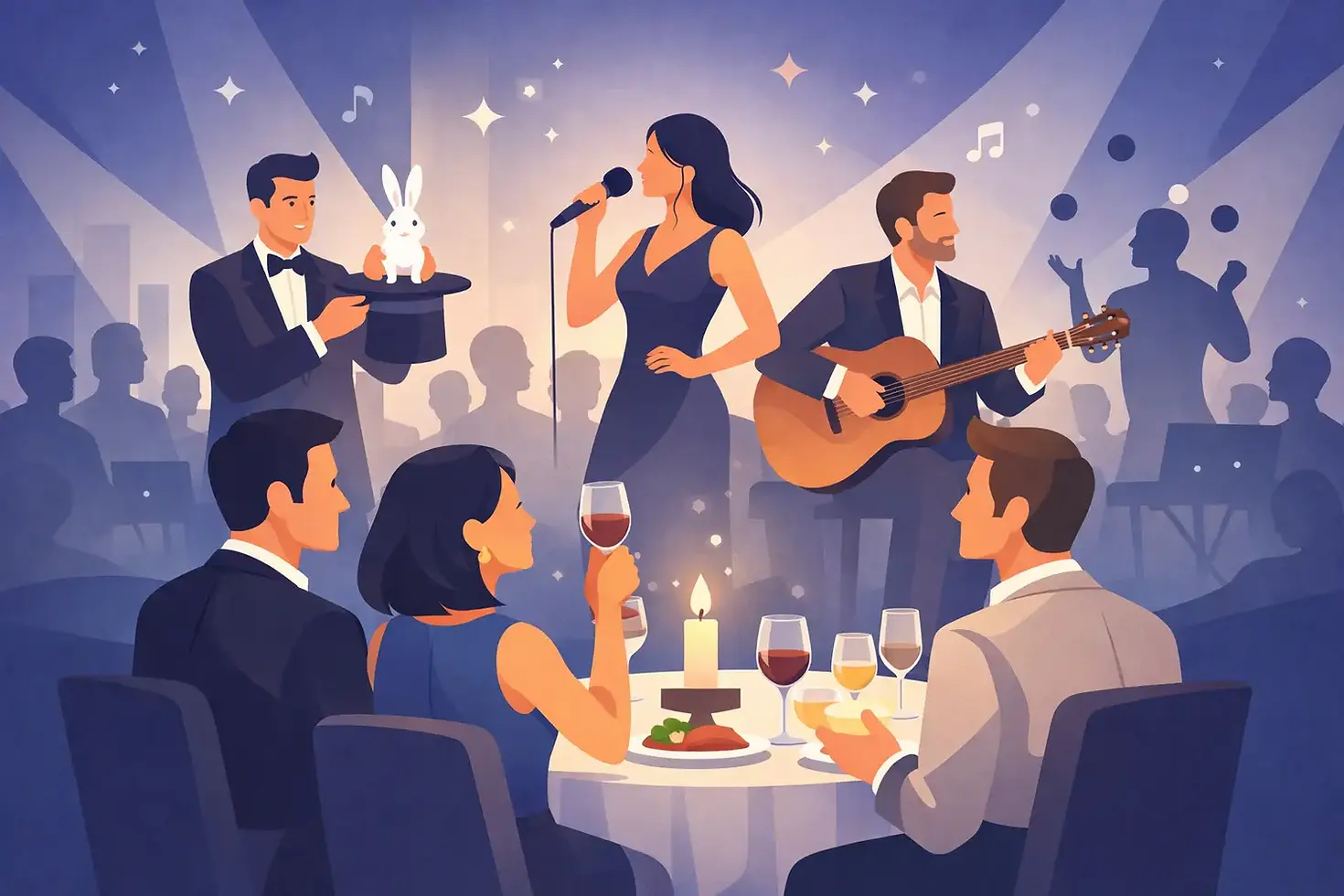
Best Corporate Dinner Entertainment Ideas
A corporate dinner can look polished on paper and still fall flat in the room. The venue is beautiful, the food is well chosen, the guest list is strong - and yet the energy feels polite instead of electric. That is why choosing the best corporate dinner entertainment matters so much. The right entertainment does more than fill time. It sets the mood, breaks the ice, and gives people a reason to connect beyond small talk and business cards.
For event planners and company hosts, that difference is everything. A dinner event usually has built-in pauses: guest arrival, pre-meal mingling, transitions between courses, award segments, and the quiet dip after everyone has eaten. Great entertainment turns those moments into momentum. Weak entertainment makes the pauses feel longer.
What makes the best corporate dinner entertainment?
The best options are not always the biggest or loudest. They are the ones that fit the room, the audience, and the goal of the evening.
If you are hosting a client appreciation dinner, you may want entertainment that feels sophisticated and conversational. If it is a team celebration or annual gala, you can lean into something more lively and high-energy. If senior leadership is present, the program may need to feel elegant and professionally paced. In each case, the entertainment should support the event rather than compete with it.
That is why interactive formats often outperform passive ones at corporate dinners. Guests do not want to sit through something that feels disconnected from their table experience. They want moments that surprise them, involve them, and give them something to talk about while the evening unfolds.
Why interactive entertainment works so well at dinner events
A dinner setting is social by nature. People are already seated in groups, moving between conversations, and waiting through natural transitions. Interactive entertainment slips into that environment beautifully.
Close-up magic is a standout example because it happens right in front of guests, often at their tables or during cocktail hour. It feels personal, immediate, and unforgettable. Instead of watching from a distance, guests become part of the moment. That creates genuine laughter, amazement, and shared reactions - exactly the kind of atmosphere most companies want at a branded event.
There is also a practical benefit. Interactive entertainment can be flexible. It can energize the room before dinner, keep guests engaged between program segments, and sustain the atmosphere without requiring a heavy technical setup. For corporate organizers, that flexibility is gold.
Best corporate dinner entertainment options to consider
Not every act suits every event, but a few formats consistently perform well because they solve common dinner-event problems.
Close-up magic and roving magic
This is one of the strongest choices for corporate dinners because it removes awkwardness quickly. Guests who do not know each other suddenly have something exciting to react to together. Tables that start off reserved become animated. Conversations open up naturally.
Roving magic works especially well during reception periods, networking sessions, and course changes. It keeps the room alive without forcing everyone to stop what they are doing. It can feel upscale, modern, and wonderfully personal when performed by a polished professional who knows how to read a corporate crowd.
For companies that want a memorable guest experience without turning the evening into a full theater show, this is often the sweet spot.
A charismatic emcee with live audience engagement
Sometimes the entertainment problem is not a lack of talent. It is a lack of flow. A corporate dinner can lose energy if transitions are clunky, announcements are flat, or the room is left waiting too long between segments.
A skilled emcee changes that immediately. The best ones do more than introduce speakers. They shape the energy of the evening, maintain pace, and keep guests engaged from opening welcome to final applause. If the emcee also brings interactive performance elements, the impact is even stronger because the event feels both professionally managed and genuinely entertaining.
This approach is especially effective for award nights, appreciation dinners, and annual celebrations where timing, tone, and guest attention all matter.
Live music
Live music can be a beautiful fit for corporate dinners, especially during guest arrival or dining. It creates ambiance and adds elegance without overwhelming the room.
The trade-off is that music tends to support the atmosphere rather than actively spark interaction. If your main goal is to encourage networking and table conversation, background music helps, but it may not carry the whole experience on its own. It works best when paired with another engaging element.
Comedy or stage acts
A strong comedian or stage performer can bring a big burst of energy to the room. For some audiences, that works brilliantly.
Still, corporate settings come with more risk. Humor is subjective, and large stage acts can feel one-directional in a dinner environment where guests are eating, talking, and only partly focused on the front of the room. If you go this route, the performer must be corporate-savvy and experienced with formal mixed audiences.
Interactive games and team segments
For internal company dinners, games can create lively participation, especially if the event celebrates team culture. Trivia, light audience challenges, or customized segments tied to the company can all work.
The key is moderation. Too many forced activities can feel uncomfortable, particularly if clients, executives, or mixed guest groups are present. The best game segments are short, well-hosted, and optional in feel, even when they are structured.
How to choose entertainment for your specific event
The best corporate dinner entertainment depends on four things: audience, venue, agenda, and desired mood.
Audience comes first. A formal executive dinner needs a different style than a festive staff party. A multinational audience may respond better to visual, universally engaging entertainment than humor-heavy material. If clients are attending, the entertainment should feel polished and impressive without becoming too casual.
Venue matters just as much. In a ballroom, you may have room for a stage program plus roaming entertainment. In a restaurant private room, intimate table-to-table experiences may work better than anything large-scale. The entertainment should suit the space instead of fighting it.
Then there is the agenda. If you already have speeches, awards, and presentations, adding a long seated show may make the evening feel overloaded. In that case, roving entertainment or a combined emcee-performer format can keep things dynamic without slowing the schedule.
Finally, think about mood. Do you want refined and elegant, warm and social, or celebratory and high-energy? The right act should reinforce that feeling from the first guest arrival to the final thank-you.
The value of entertainment that also supports event flow
One of the smartest choices for a corporate dinner is entertainment that does double duty. When a performer can also support hosting, timing, and guest coordination, the entire evening feels more elevated.
That is where interactive entertainers with emcee experience stand out. They are not just there to perform a segment and leave. They help maintain rhythm, guide attention, and keep the audience emotionally connected to what is happening in the room.
For organizers, this often means fewer dead spots, smoother transitions, and a more confident event experience overall. For guests, it simply feels like a better night.
This is one reason many companies in Singapore choose performance formats that blend hosting and close-up engagement. A brand like Magic Essential, for example, appeals to hosts who want more than a standard act. They want captivating entertainment that also helps the event feel polished, energized, and memorable from start to finish.
Common mistakes to avoid
The biggest mistake is choosing entertainment too late. By the time the venue, meal timing, and stage setup are locked in, your options may be narrower than you expected. Early planning gives you more freedom to match the entertainment to the experience you actually want.
Another mistake is treating entertainment as filler. Guests can feel the difference between a thoughtfully chosen experience and something added at the last minute just to occupy time. The best entertainment becomes part of the event identity.
It is also easy to misjudge volume and pacing. A dinner event needs energy, but not chaos. Entertainment should lift the room, not interrupt every conversation or drag attention away from key moments.
Creating a dinner guests will actually remember
People rarely remember every course or every slide in the presentation. They remember how the event felt. They remember the laughter at their table, the surprise of an impossible moment happening inches away, the smooth confidence of a well-led program, and the sense that the evening had real life in it.
That is what the best corporate dinner entertainment delivers. It creates magical moments that people carry with them after the lights go down and the name badges come off.
If you want your dinner to feel engaging instead of routine, choose entertainment that invites people in, not just something that performs at them. That is usually where the real spark begins.


Comments